
Services / Legal Basement Renovations
Legal Basement
Renovations
Ontario Building Code-compliant basement suites that pass every inspection. We manage the full permit process, from design drawings to final occupancy sign-off.
Why “Legal” Is Not Optional
An unpermitted basement suite is not just a bylaw issue. It is a liability. If a tenant is injured and your suite lacks an occupancy permit, your home insurance can deny the claim. Municipalities across the GTA actively enforce secondary suite compliance; an order to vacate the unit can arrive at any time.
We specialize in navigating the Ontario Building Code and GTA municipal permit offices to deliver suites that are fully legal, inspected, and rentable from day one. We have completed hundreds of basement projects across Brampton, Mississauga, Etobicoke, and Oakville. We know exactly what each building department requires.
Ontario Building Code Requirements
- ✓
Minimum ceiling height
1.95 m (6’5”) throughout habitable areas
- ✓
Egress windows
Minimum 0.35 m² clear opening in every bedroom
- ✓
Fire separation
30-min rated assembly between suite and upper unit
- ✓
Smoke & CO alarms
Interconnected, on every level and in each bedroom
- ✓
Ventilation
Mechanical or natural ventilation per OBC Section 9.32
- ✓
Electrical
Dedicated panel or circuits; ESA permit and inspection
- ✓
Plumbing
Certified plumber; municipal permit for drain/vent work
Our Work
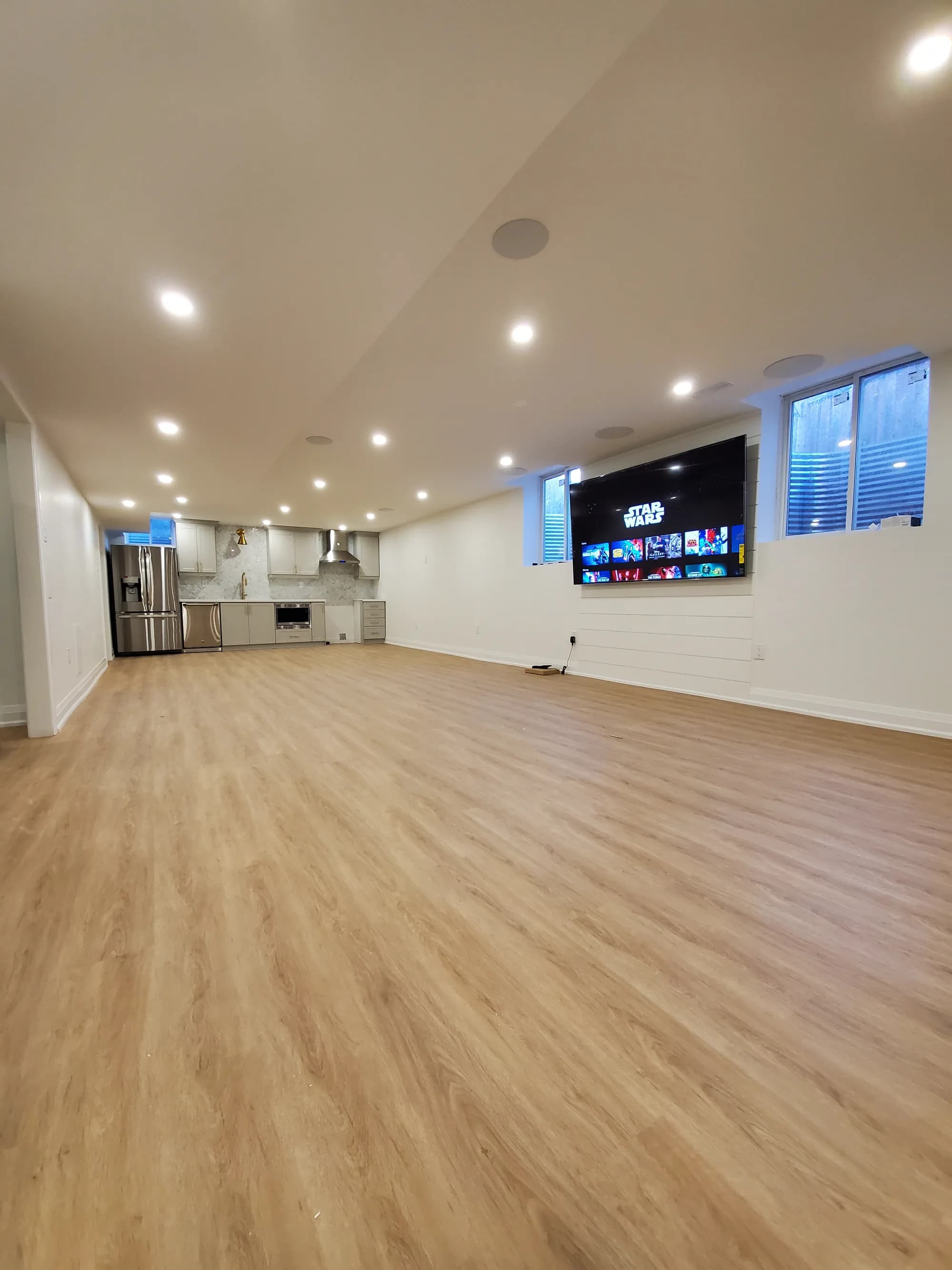
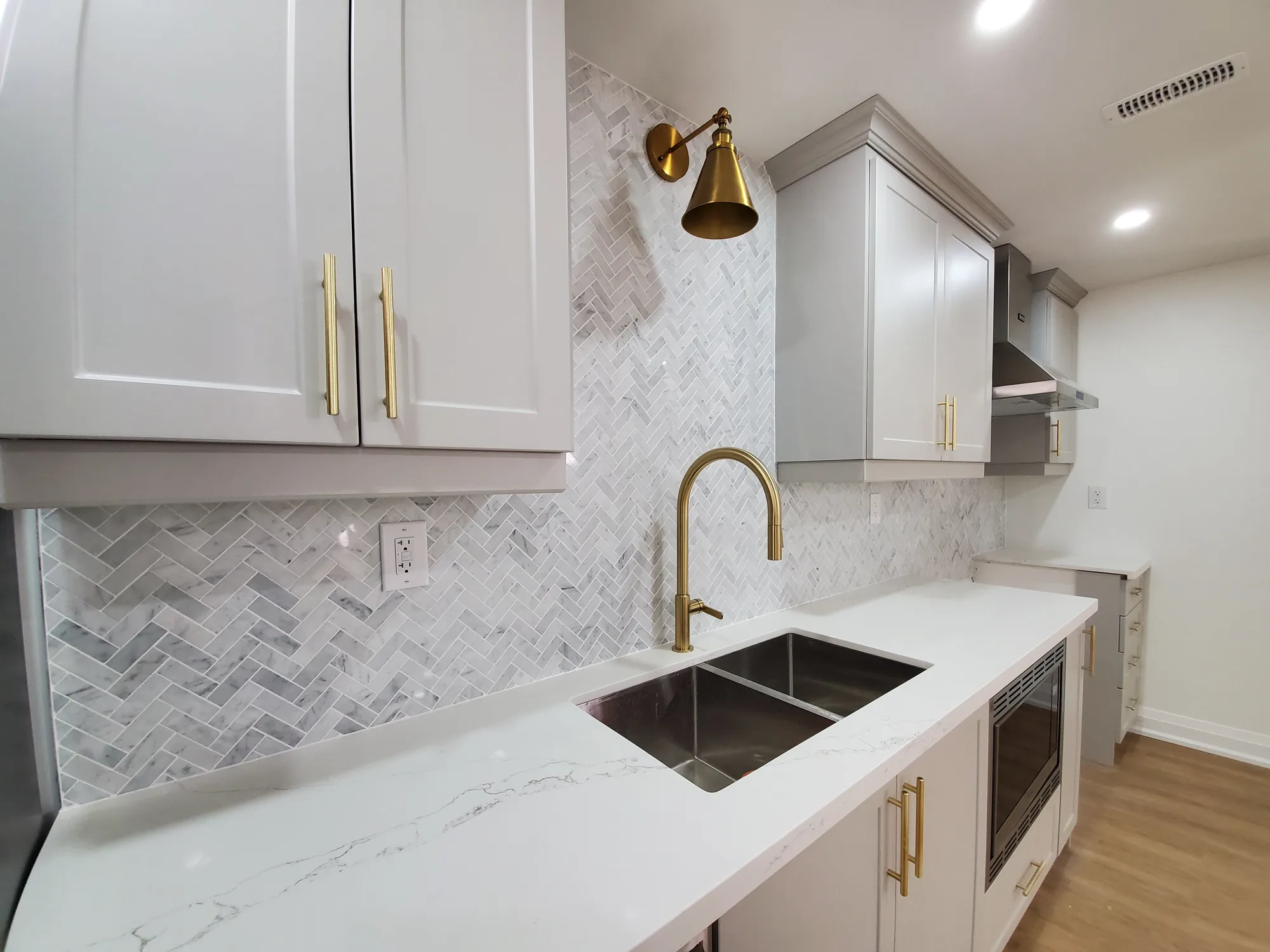
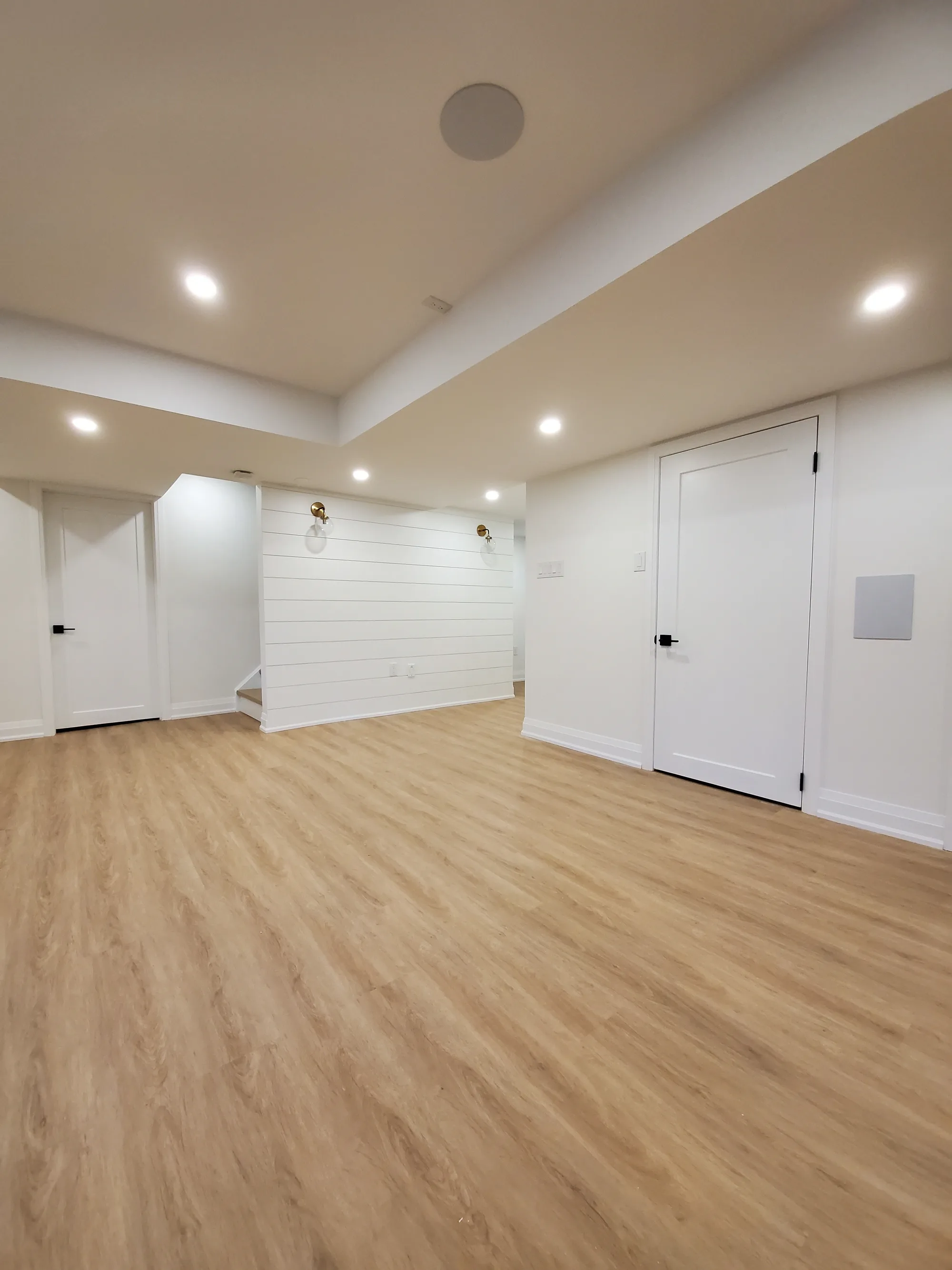
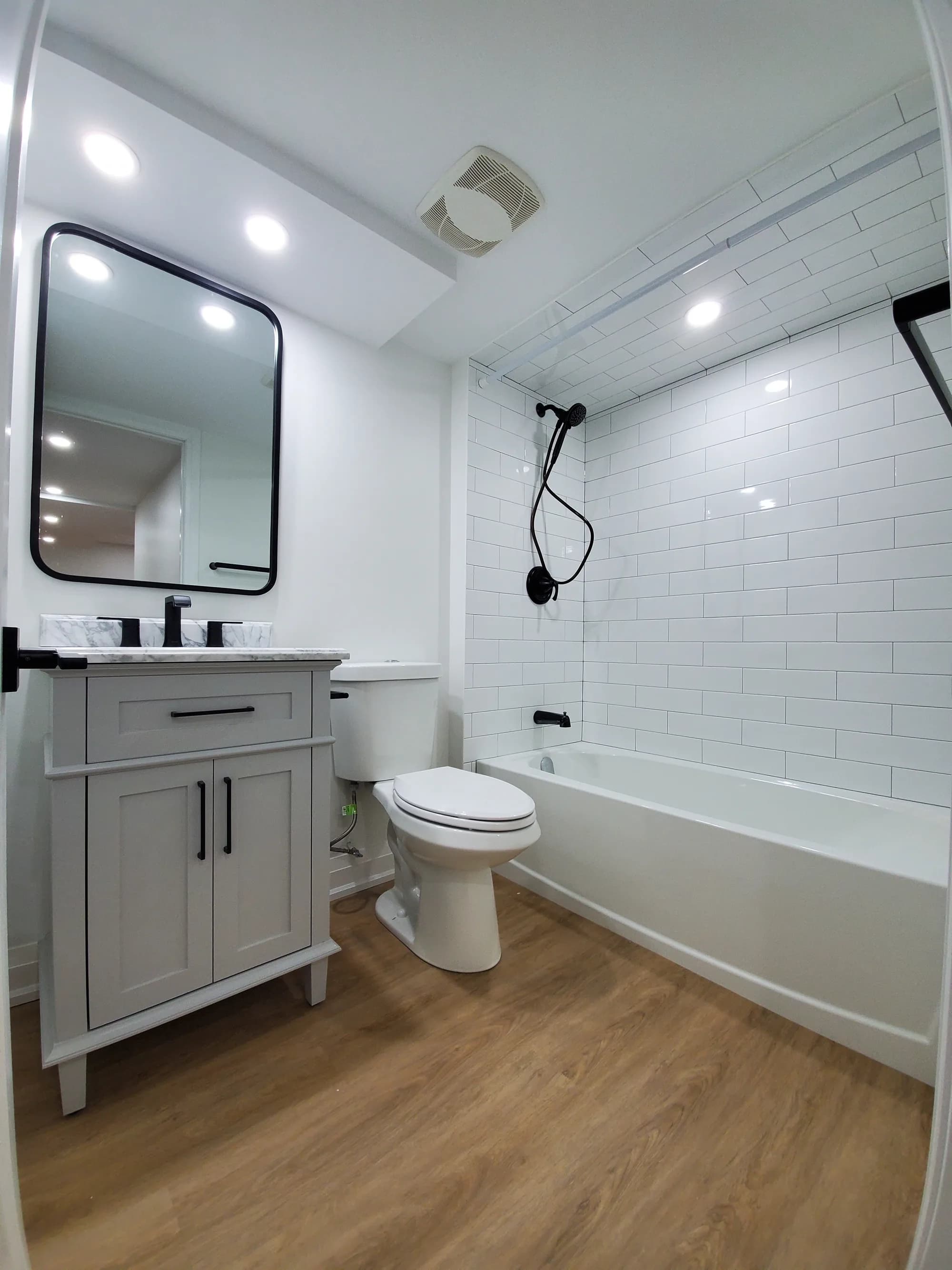
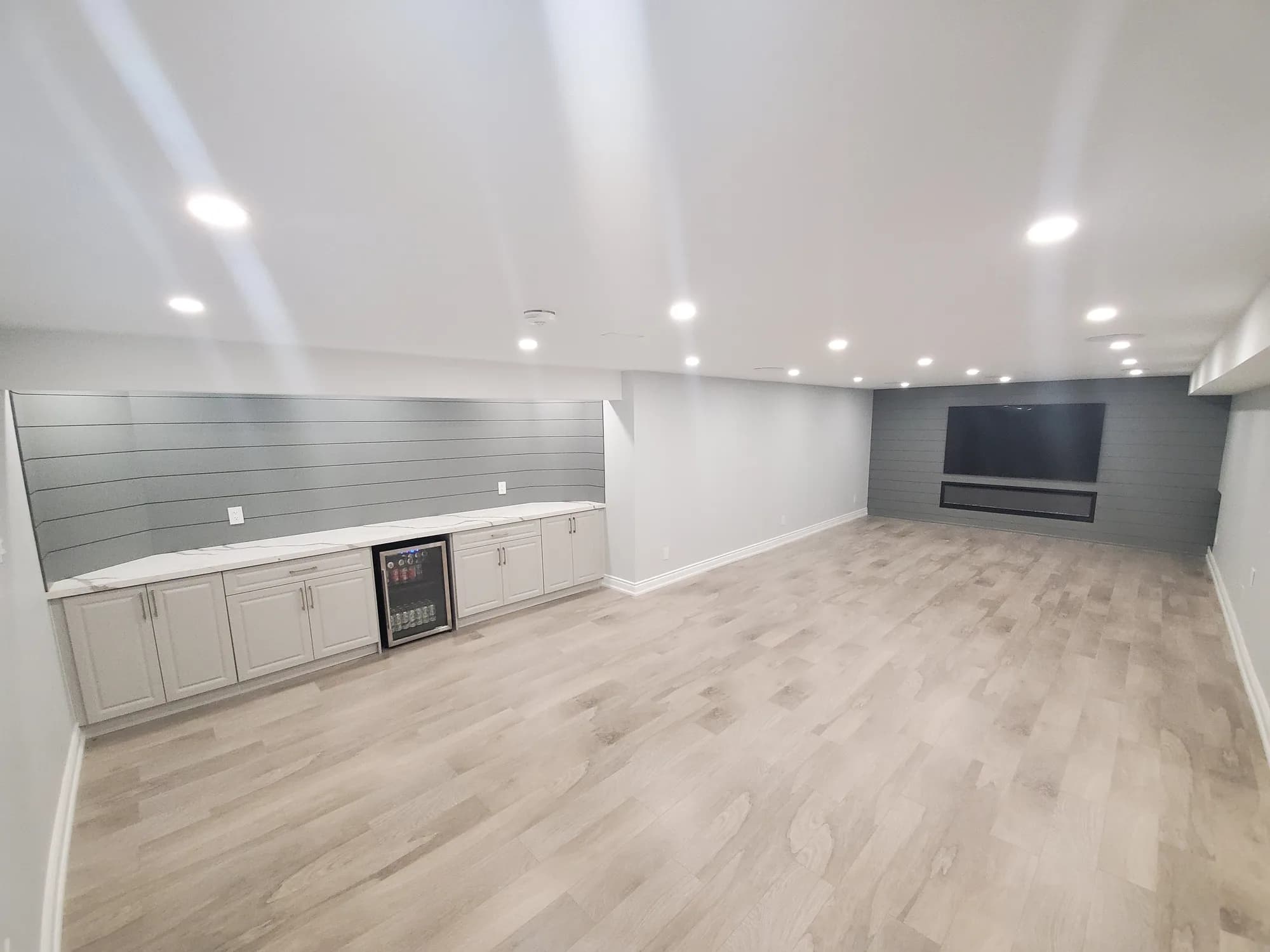
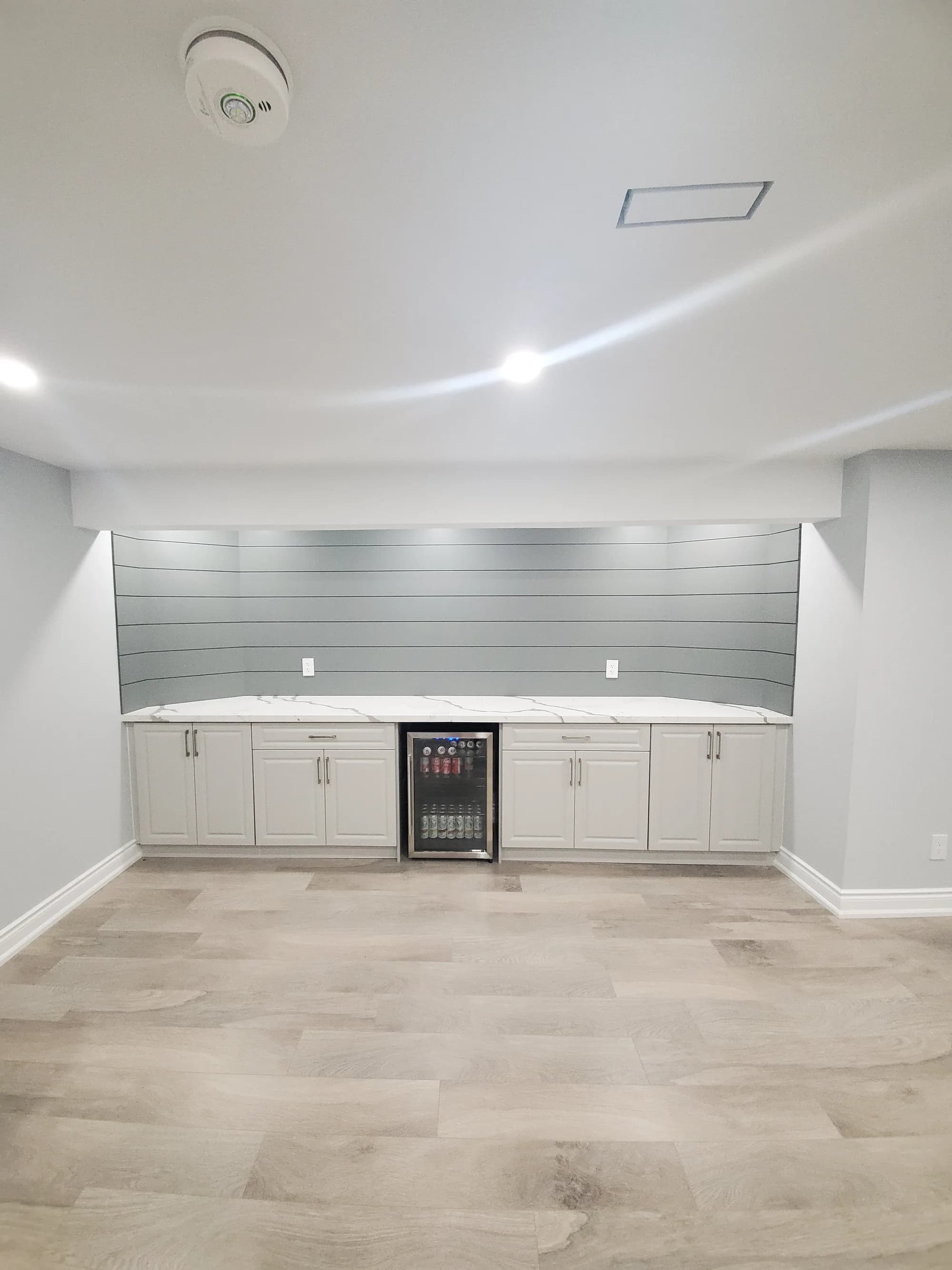
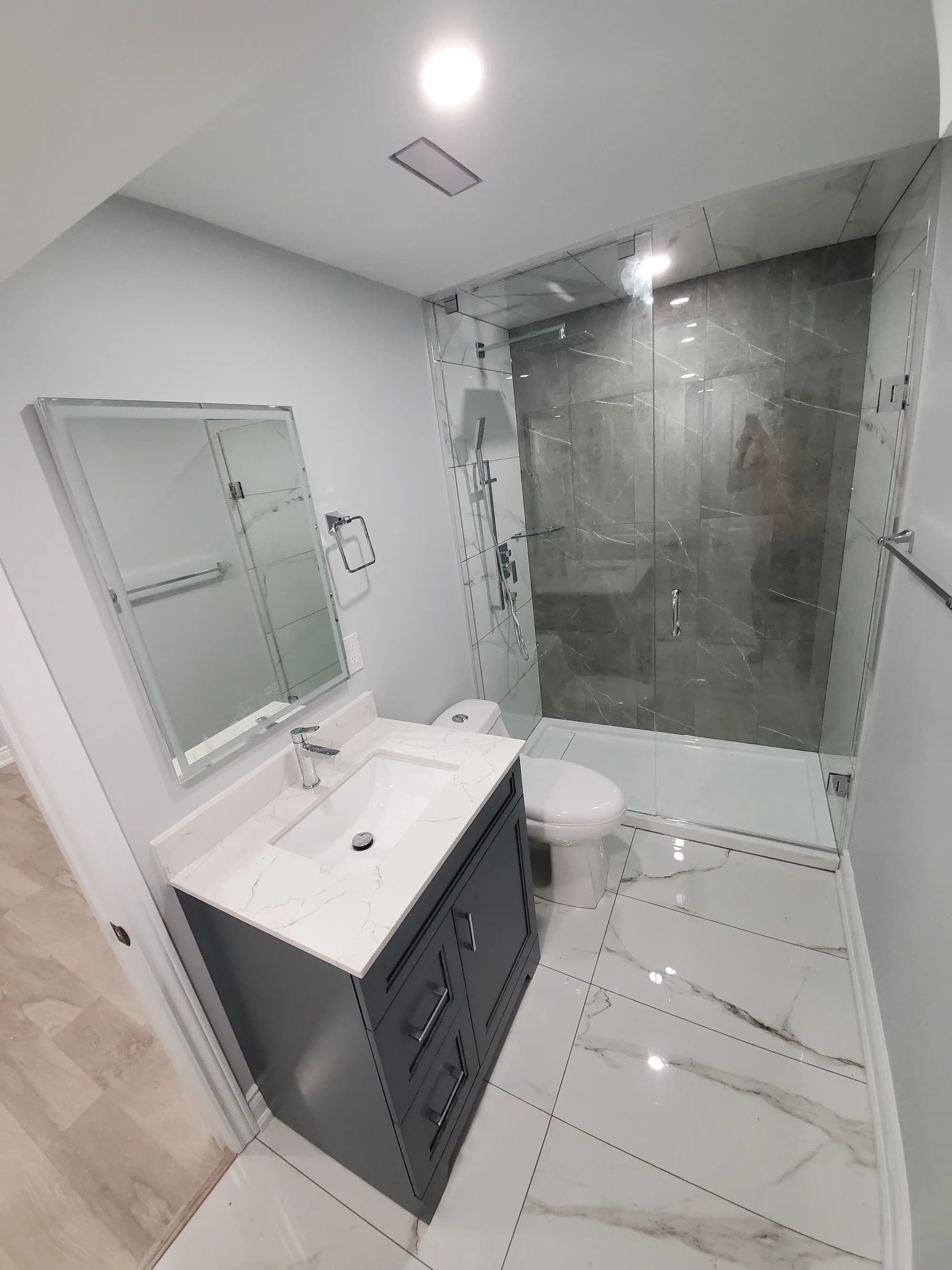
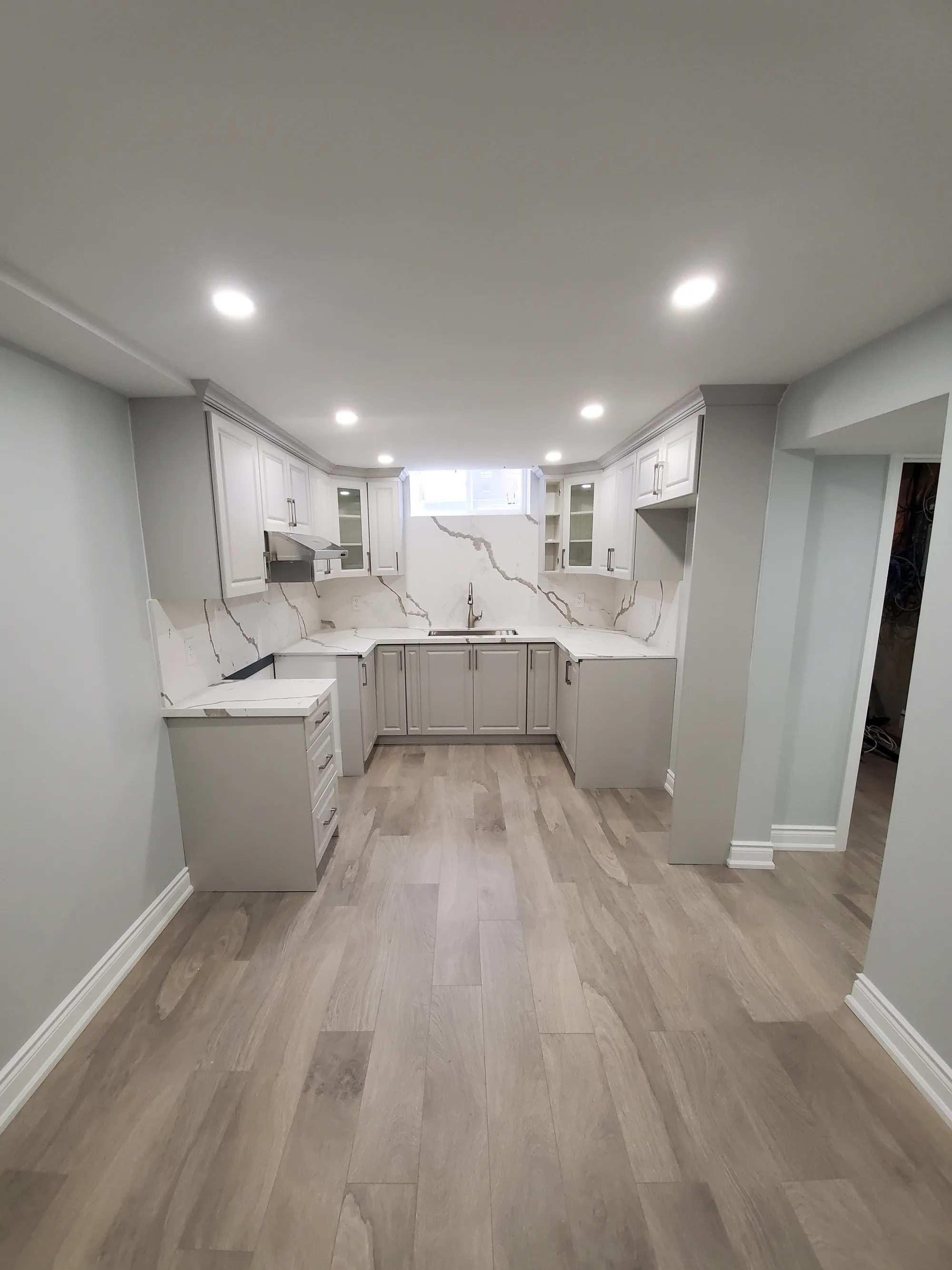
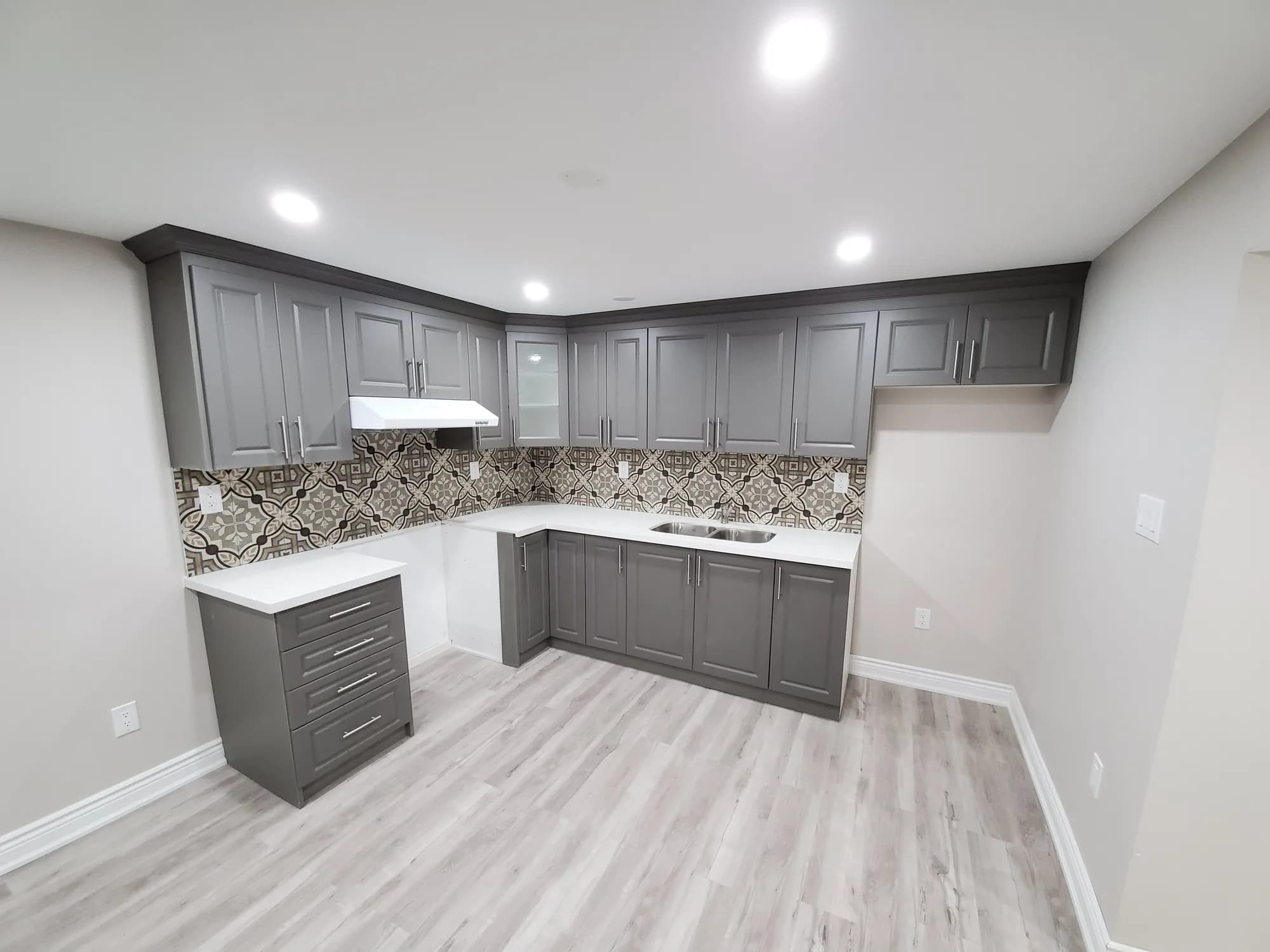
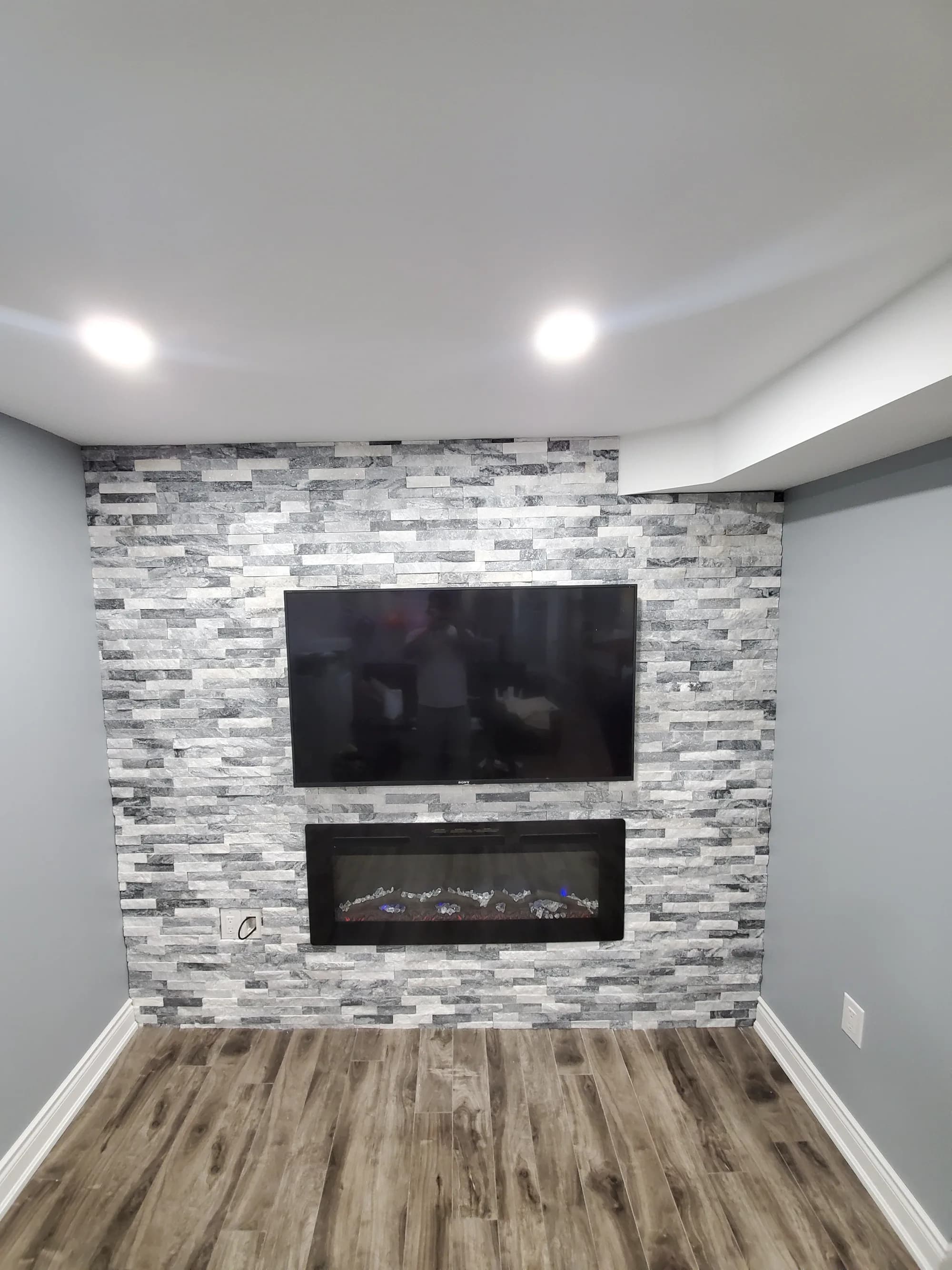
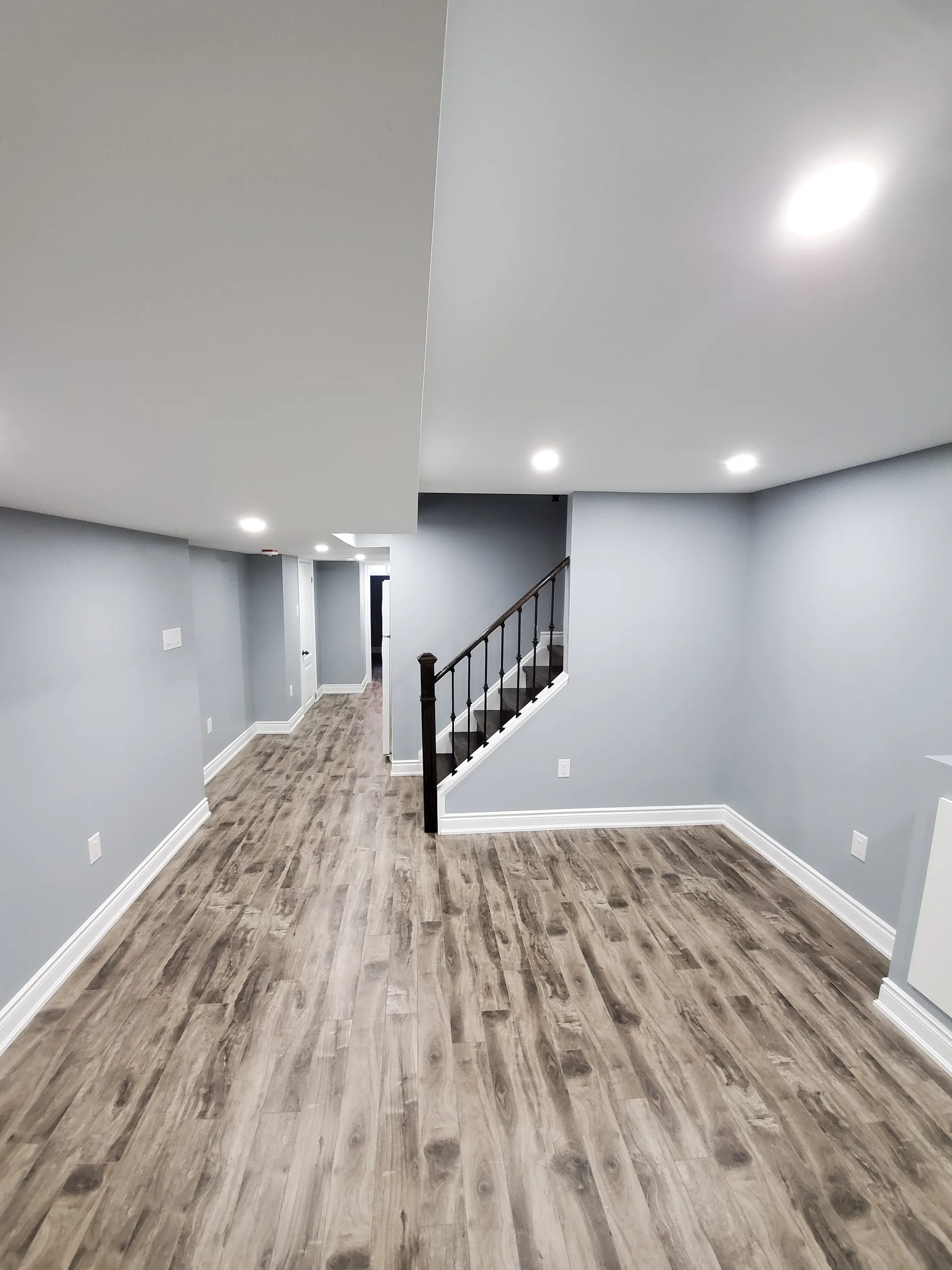
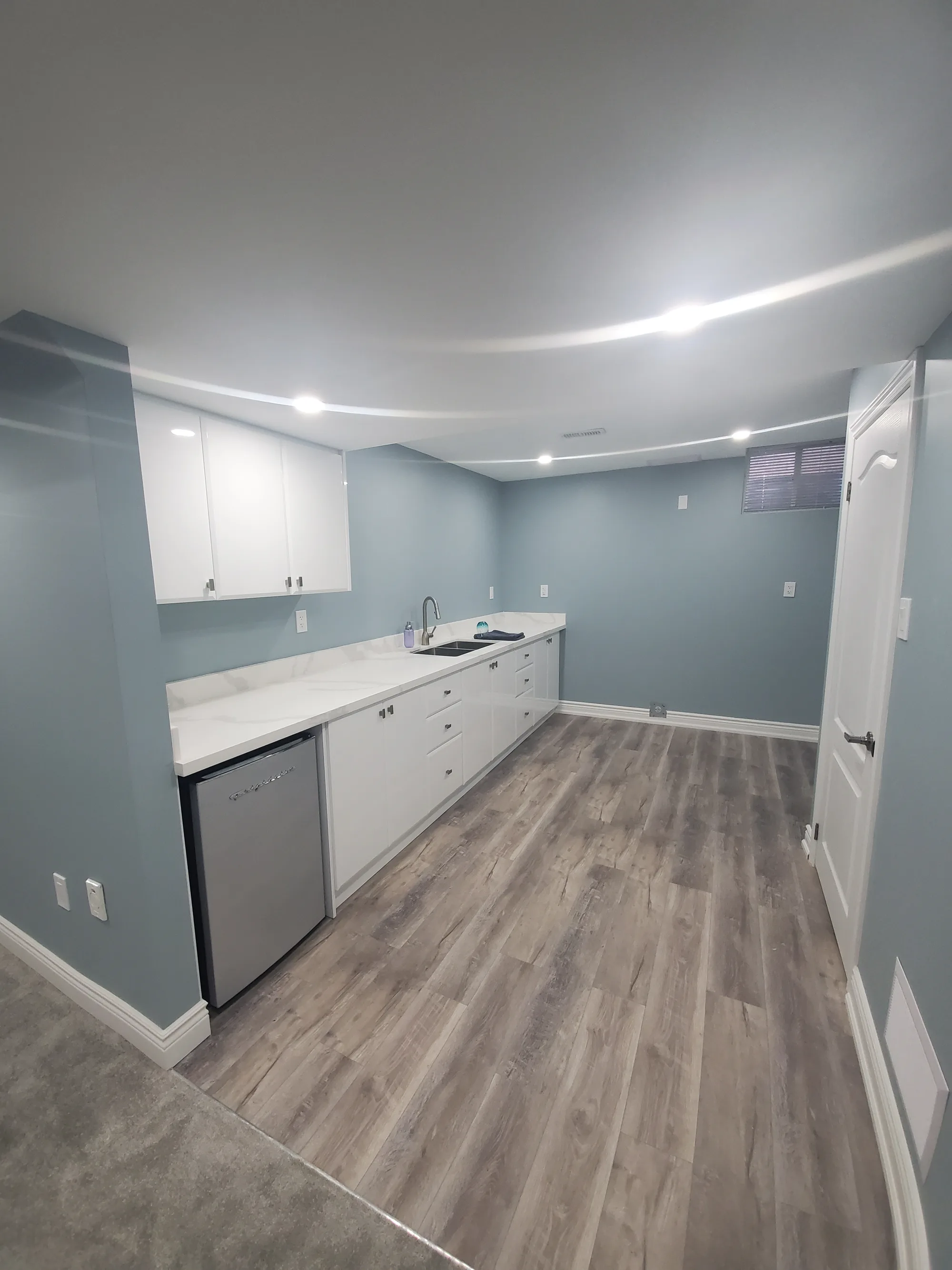
Recent Basement Projects
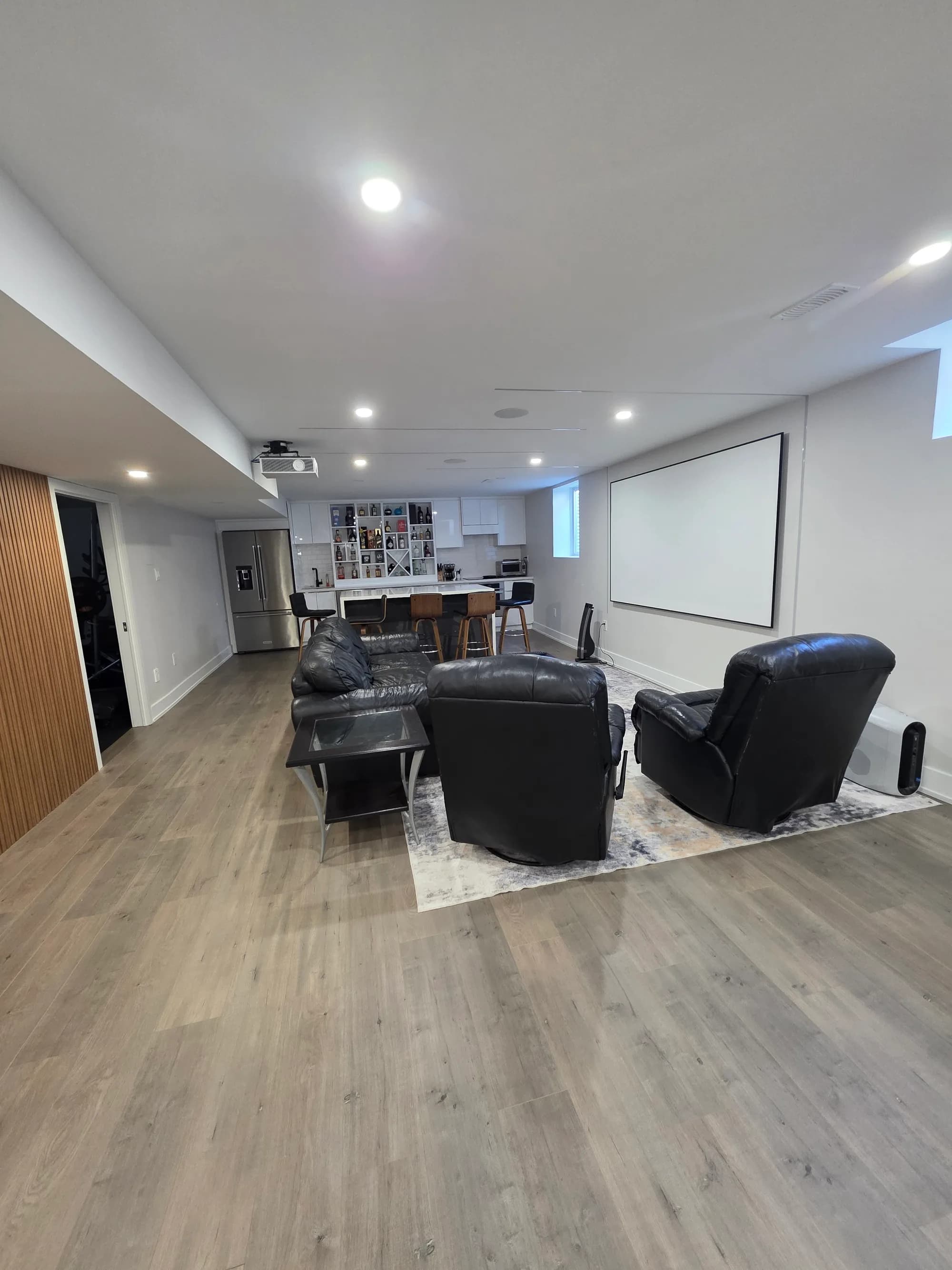
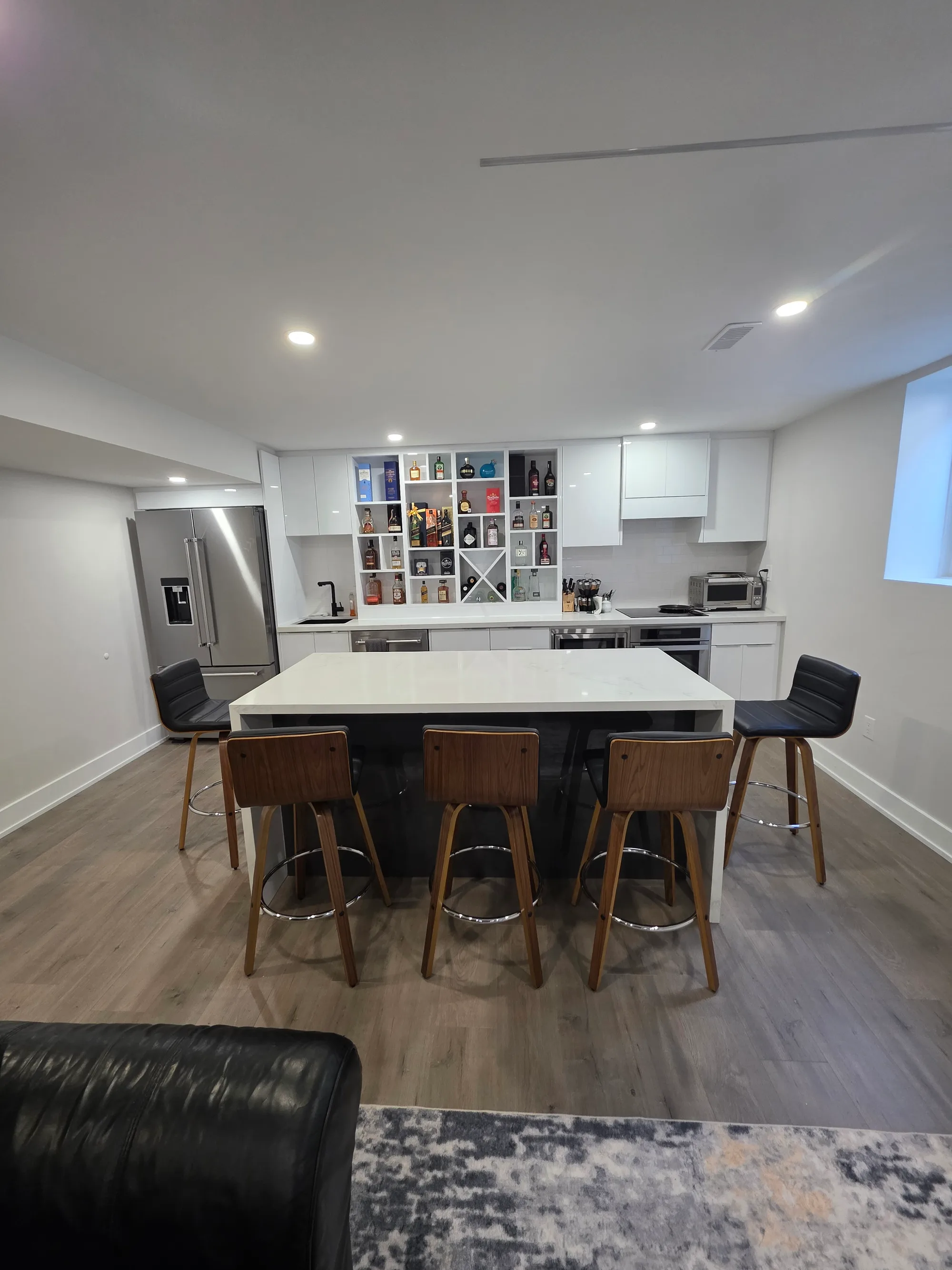
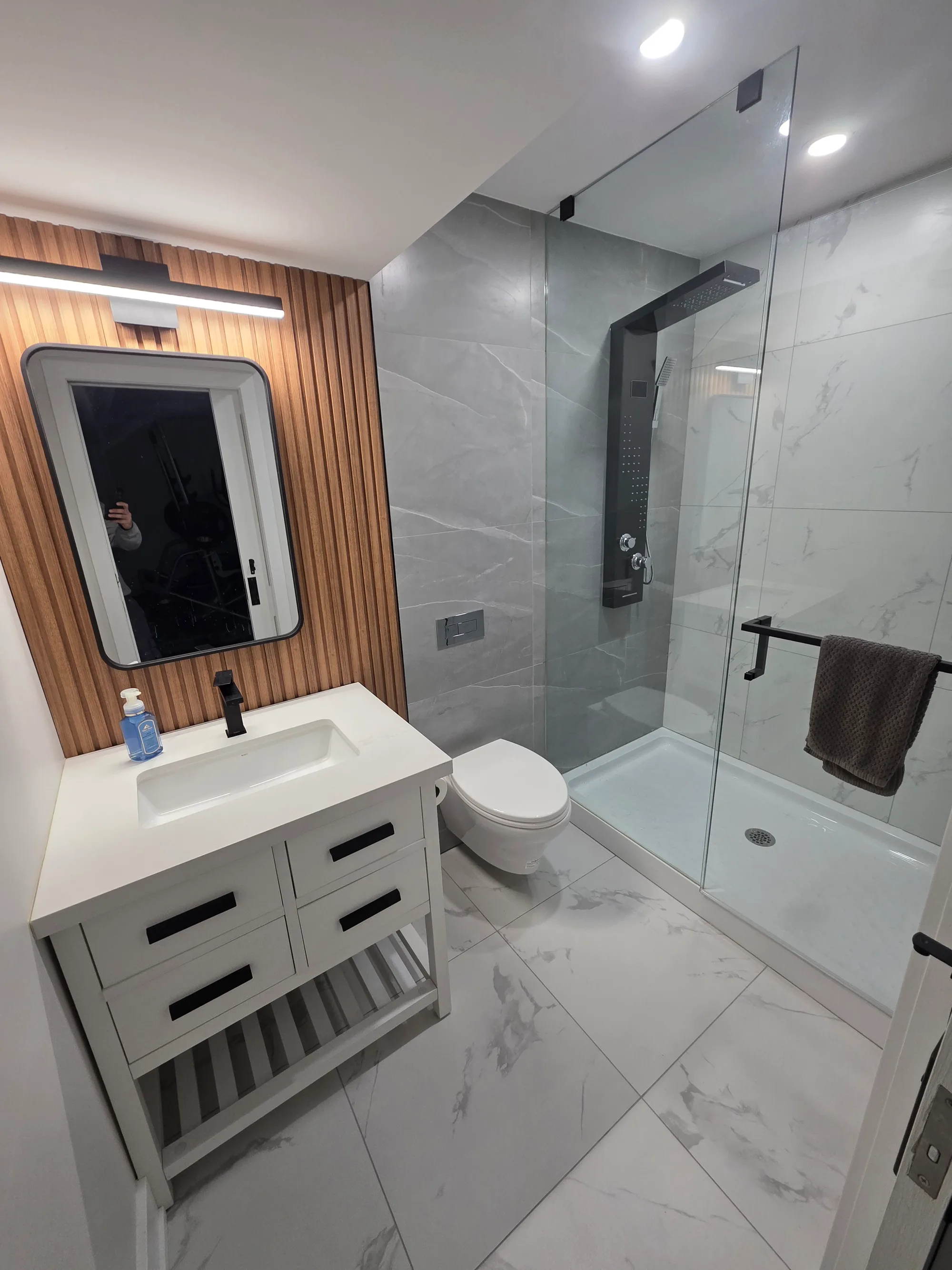
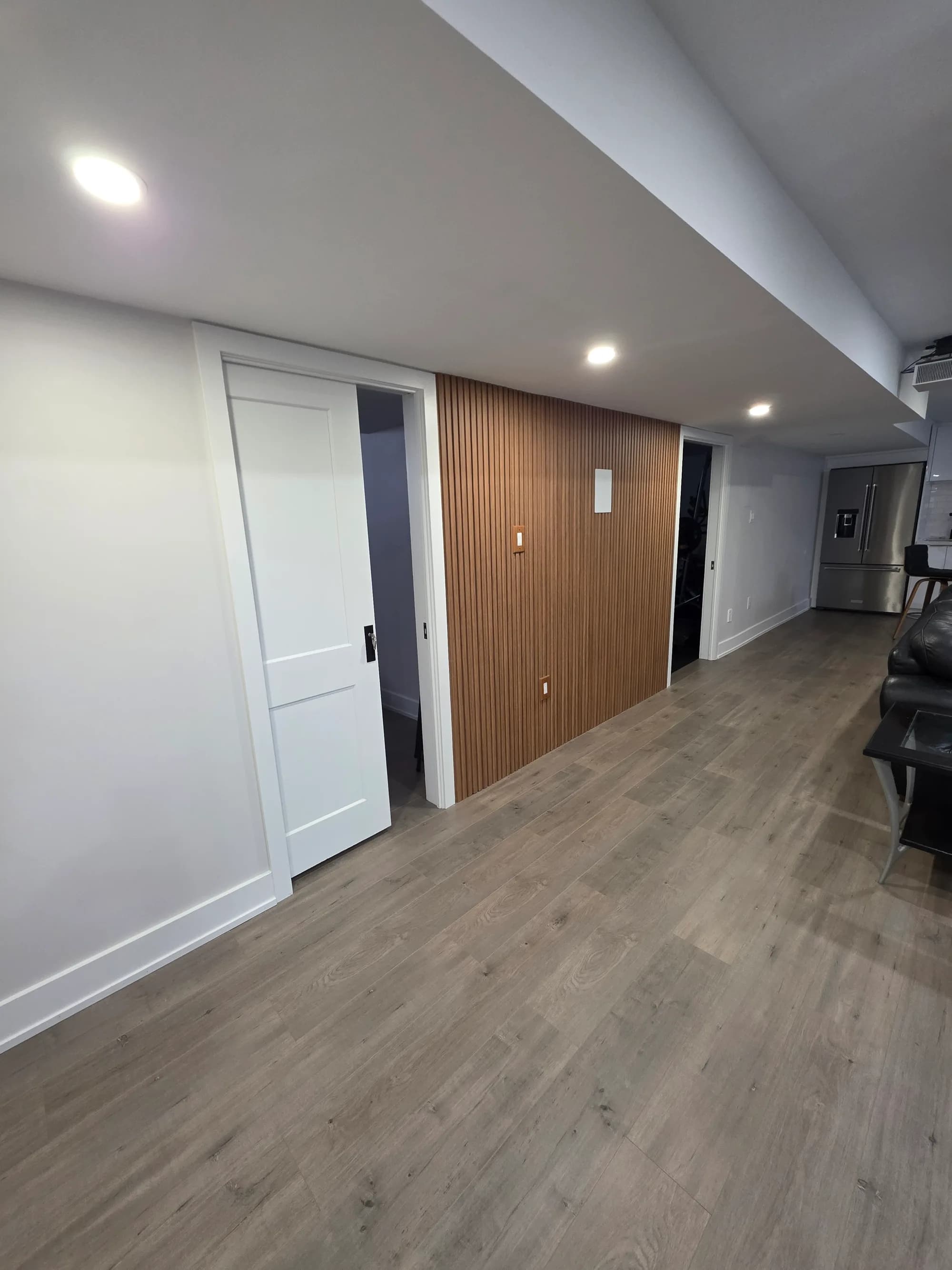
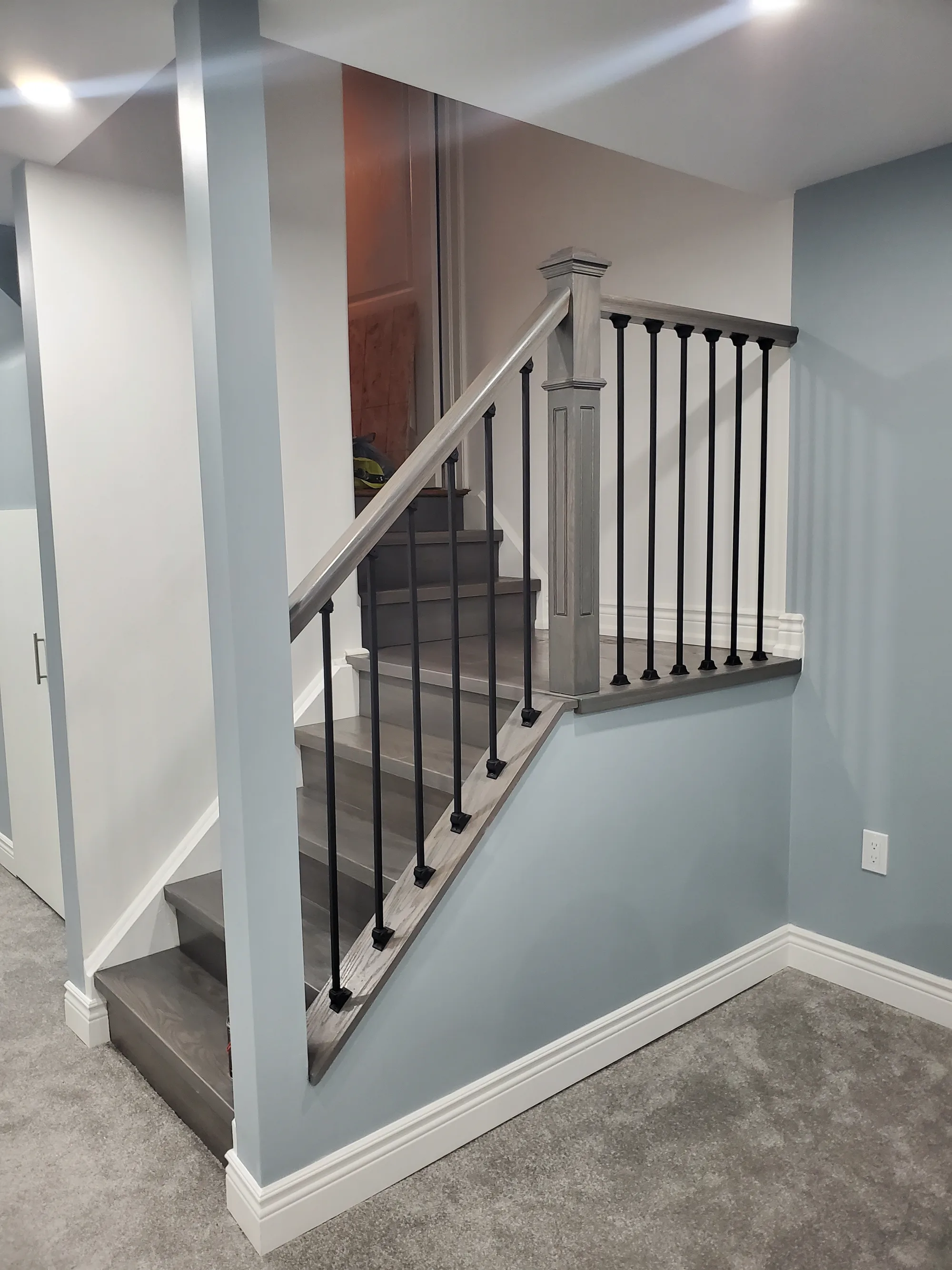
End-to-End Permit Process
From Application to Occupancy
01
Feasibility Review
We assess your existing basement: ceiling height, egress options, mechanical room location, and electrical panel capacity. All of this is reviewed before you commit to anything.
02
Design Drawings
Our team prepares permit-ready floor plans showing suite layout, egress window locations, fire separation, smoke and CO detector placement, and HVAC routing.
03
Permit Submission
We submit the application to your municipality on your behalf and act as your agent during the review. We answer any technical questions from the building department so you don't have to.
04
Rough-In & Inspections
Framing, plumbing rough-in, electrical rough-in, and HVAC rough-in are done and inspected before walls close. We schedule and attend every site inspection.
05
Insulation & Drywall
Fire-rated assemblies between floors, vapour barrier, and full drywall. Sound insulation batts in partition walls for tenant privacy. Inspection sign-off before drywall close.
06
Finishes & Final Inspection
Flooring, kitchen, bathroom, laundry rough-in, egress windows, exterior door, and separate entrance if required. Final occupancy inspection and permit close-out.
FAQ
Common Questions
What makes a basement suite "legal" in Ontario?
A legal secondary suite must meet Ontario Building Code requirements and have an open building permit that receives a final occupancy inspection. Key requirements include: minimum ceiling height of 1.95 m (6'5") throughout habitable areas, at least one egress window in each bedroom meeting minimum size standards, interconnected smoke and CO alarms, fire separation between the suite and the upper unit (typically 30-minute fire-rated assembly), and separate or shared HVAC meeting ventilation standards. Renting an unregistered or non-compliant basement exposes landlords to significant liability.
How long does it take to get a permit for a basement suite?
Municipal review times vary. In Brampton and Mississauga, standard residential permit applications typically take 10–15 business days for a first review. If revisions are requested (which is common), the full approval cycle can run 4–8 weeks. We factor this into your project schedule and begin non-permit-required prep work while the application is in review.
Do I need a separate entrance to legalize my basement?
Not always. Ontario Building Code does not mandate a separate exterior entrance for a secondary suite. Access through a shared space (e.g., a shared foyer) is permitted if fire separation and emergency egress requirements are met. However, many landlords and tenants prefer a separate entrance for privacy and convenience. We assess your specific layout and advise on the most practical option.
What does egress window compliance involve?
In Ontario, every sleeping room in a basement suite must have at least one window that meets minimum unobstructed opening dimensions: typically 0.35 m² (3.77 sq ft) of clear opening with no dimension less than 380 mm (15"). If your existing windows don't meet these specs, we cut new openings, form concrete window wells if below grade, and install compliant windows. This work is included in our permit scope and inspected before final close-out.
Will a legal basement suite increase my property taxes?
Legalizing a basement suite may trigger a property assessment review by MPAC, which could result in a modest increase to your assessed value and therefore your property taxes. However, rental income from a compliant, permitted suite almost always outweighs any tax increase. Illegal rentals carry far greater risks: insurance voidance, municipal orders to vacate, and landlord liability in case of injury or fire.
Can I add a kitchen and laundry to the suite?
Yes. A full kitchen with range, refrigerator, and dishwasher is standard for a self-contained suite. We install a dedicated kitchen circuit, range hood venting, and waterproof the wet areas. For laundry, we can add a stacked washer/dryer alcove with its own drain and dedicated electrical circuit, or connect to a shared laundry area, whichever your layout allows. All work is included in the permit scope.
Get Started
Ready to add legal rental income?
Free estimates. We assess feasibility at no cost.